Radio | News week in plain Finnish | Saturday 29.11.2025
Unnecessary treatments and medications in Finland
Listen
You can read the news simultaneously below.
Unnecessary treatments and medications in Finland
This time, the topic of the news week is unnecessary treatments and medications in Finland.
In Finland, patients are often given treatments and medications that are of no benefit. Unnecessary treatments cost money and burden the healthcare system.
We will now tell you more about the problems of unnecessary treatments and how the situation can be improved.
Open image viewer
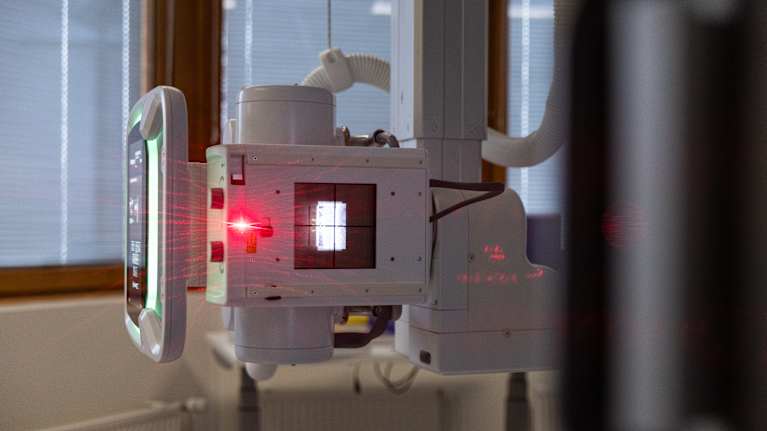
An unnecessary X-ray exposes a person to extra radiation. Photo: Esa Syväkuru / Yle
Antibiotics and X-rays
Around 20–30 percent of healthcare interventions do not help the patient, according to a new study by physician and researcher Aleksi Raudasoja at the University of Helsinki.
Unnecessary treatments include, for example, antibiotic courses for a common cold or back X-rays when there is no real reason for it.
Doctors also prescribe medication for mild insomnia or depression, although medications are not always helpful.
Unnecessary treatments cause harm. For example, unnecessary X-rays expose people to excess radiation.
Unnecessary treatments take up a lot of time and money, costing up to hundreds of millions of euros a year.
Patient’s wishes
Doctors sometimes prescribe unnecessary treatments because the patient wants medicine or testing.
If the doctor does not prescribe the desired treatment, the patient will be disappointed or require further clarification.
Many doctors are afraid of making a mistake if they don’t provide treatment just to be on the safe side.
More than 80 percent of doctors say that unnecessary treatments and excessive testing are a big problem.
Not all patients receive the necessary treatment, and some people are left without help.

Open image viewer
Doctor Aleksi Raudasoja conducted a study on the treatments and examinations. Raudasoja’s research is a doctoral dissertation he completed at the University of Helsinki. Photo: Toni Määttä / Yle
Chatting and a familiar doctor
Jukka Mattila, director of the Finnish Medical Association, says that a permanent and familiar doctor reduces unnecessary treatments.
When a doctor knows the patient, treatment decisions are made calmly.
Researcher Raudasoja also says that the best way to reduce unnecessary treatments is to talk to the patient. Patients should be informed about the potential harms and benefits of treatments.
Researcher Raudasoja says that medical training needs to be developed so that treatments are only given when they are truly beneficial.
Reducing unnecessary treatments saves money and time and improves healthcare.
Repetition
The topic of the news week was unnecessary treatments and medications in Finland.
In Finland, a lot of research is done and medications are prescribed that do not benefit the patient.
Unnecessary treatments can be harmful and burden healthcare.
Experts say more discussion is needed between patient and doctor and training for doctors.